
October 23, 2026
Word Grid: The daily 5x5 challenge and how to solve it in minimum moves
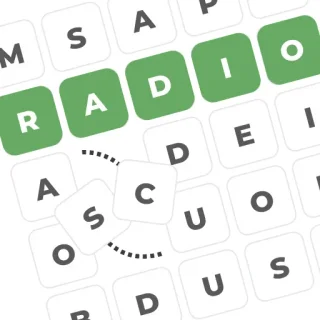
Unlike traditional daily word games where you deduce an unknown target word blindfolded round by round, Word Grid challenges your brain from an entirely different analytical angle: every single letter is already face up on the board from the start.
The engine picks five valid 5-letter words, places them inside a 5x5 grid, and scrambles their letters across the board. Your goal isn't to guess what missing letters to pick, but to untangle the layout: swap tiles between any two spots on the board until you form five valid horizontal words at the same time, using as few moves as possible.
How Word Grid Works: Rules and Interface
The 5x5 grid contains exactly 25 letters. You aren't restricted to sliding tiles or moving only to adjacent spots. You have complete freedom of movement across the entire board:- Free Tile Swapping: Click or tap any tile on the board, then select any other tile, whether it sits in the same row or the opposite corner, to instantly swap their positions.
- Immediate Horizontal Validation: As soon as the five letters in any horizontal row spell a valid dictionary word, that entire row lights up in green.
- No Duplicate Words: All five horizontal rows must be distinct words.
- Full Dictionary Support: All valid 5-letter English words are accepted, including standard nouns, adjectives, verbs, conjugated forms (e.g., jumps, walked), and plurals (e.g., books, trees).
- Game Completion and Scoring: The puzzle is solved once all five horizontal rows are lit green. Your final score is directly tied to efficiency: the fewer moves you spend, the higher you rank on the daily leaderboard.
The "False Positive" Trap
The real challenge in Word Grid isn't simply spotting words that exist. It's finding a set of five words that cleanly consumes all 25 letters.The most common mistake beginners make is locking in the first word that catches their eye. For instance, if you quickly assemble CRANE on the top row, the row will immediately turn green. However, by spending that C, R, and E right away, you might leave the remaining four rows starved of vowels or stuck with awkward consonant clusters like an isolated Q, J, or Z.
Solving Word Grid with a low move count requires treating the board as a closed letter economy: every letter you lock into one row is permanently removed from the remaining four.
Strategy: How to Clear the Board in Record Moves
To climb the daily leaderboard and keep your move counter as low as possible, follow a structured process before swapping tiles at random.1. Scan for High-Scarcity Consonants First
Before making your first swap, count the low-frequency letters on the board:- If there is a Q, instantly look for the U and check which vowel can follow it. Plan that row first.
- Keep an eye on rigid, low-mobility consonants like J, Z, X, V, B, K. Mentally distribute them across different rows so you don't trap multiple awkward consonants on the same line.
2. Balance Vowels Across Rows (The 2:3 Guideline)
In a healthy set of five English words, most 5-letter rows contain two vowels and three consonants, or occasionally three vowels and two consonants.- If a single row hoards four vowels, you are creating an unavoidable bottleneck somewhere else on the board.
- Make early adjustment swaps so that every single row has at least two viable vowels (such as A-E, O-U, or E-I).
3. Leverage High-Flexibility Endings and Plurals
Suffixes and inflections are your best move-savers:- Plural -S: An S at the end of a row lets you easily turn 4-letter stems into full 5-letter solutions (e.g., PARK →PARKS, BIRD → BIRDS).
- Common Word Endings: Letter clusters like -ER, -ED, -CH, -TH, and -LY can instantly stabilize a line, leaving you with only 2 or 3 letters to rearrange.
4. The Two-in-One Direct Swap
When you have two rows that are nearly finished, avoid blind trial-and-error moves. Identify the surplus letter in Row 1 and the missing letter in Row 3. By making a single, calculated swap between those two tiles, you can trigger two green rows at the exact same time with a single move.Frequently Asked Questions
Is there only one unique solution every day?Not necessarily. While the system scrambles five specific words generated for that day's seed, the validation engine accepts any valid word found in the dictionary. If you rearrange the 25 letters into five valid horizontal words different from the original intended solution, the game awards you the win just the same.
What happens if I move a tile from a row that is already green?
If you pull a letter out of a completed row, that row will lose its green highlight until you re-form a valid word in it. Sometimes breaking an already-solved word is necessary to retrieve a critical vowel needed to save the rest of the board.
Why does the move count matter so much?
Because any 25-letter board can eventually be brute-forced through endless random swaps. The true mastery of Word Grid lies in visualizing the full board state before committing your moves.
Put Your Vocabulary to the Test
The grid resets every night at midnight with a brand-new set of 25 letters for all players worldwide. Jump into today's board on Word Grid English (or try the Spanish edition on Word Grid en español).Plan your swaps, balance your vowels, and see how few moves it takes you to turn all five rows green. Enjoy our game!