
Word Ladder: Origin and Gameplay Tips
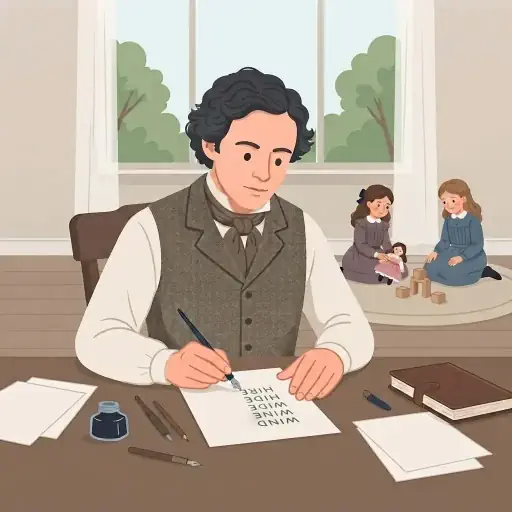
Word Ladder: The Logic Challenge Invented by a Master of Wonderland
If you love word games and daily brainteasers, chances are you've already been hooked by the Word Ladder. But did you know this game wasn't born recently, but nearly 150 years ago in the mind of one of the most imaginative authors in history?
A Legendary Origin: Lewis Carroll
The mastermind behind this pastime is none other than Lewis Carroll, author of Alice's Adventures in Wonderland. Carroll, who besides being a writer was a brilliant mathematician at Oxford, invented the game on Christmas Day in 1877 to entertain two young girls. His concept was simple yet fiendish: transform one word into another by changing just one letter at a time, ensuring every intermediate step forms a valid dictionary word.
Carroll originally dubbed it "Doublets," and ever since, the game has remained a cornerstone of logic puzzles and brain training.
How Does It Work? The Mechanics of Change
The premise is a fascinating exercise in mental agility:
Start and Finish: You are given an initial word (e.g., "COLD") and a target word (e.g., "WARM").
The Leap: You must bridge the two by altering a single letter per move.
The Golden Rule: At each step, the resulting string must be a recognized dictionary word.
The Goal: Forge the shortest possible ladder (using the fewest steps).
Quick Example: COLD -> CORD -> CARD -> WARD -> WARM.
Tips to Become a Pro
If you want to climb the daily leaderboards and sharpen your solving speed, keep these tactics in mind:
- Hunt for vowel swaps first: Vowels form the backbone of words. If the target word leans heavily on specific vowels, try introducing them early on using versatile pivot words.
- Anchor shared letters: If the start and destination words already share common letters in identical slots, preserve those letters as long as possible. Don't touch them unless absolutely necessary.
- Identify common bridge words: Certain short words act as natural transit hubs in the language because they connect easily to multiple word families.
- Watch out for dead ends: Getting fixated on changing one specific letter can paint you into a corner. If you hit a wall, step back and rethink the route: sometimes the optimal solution requires detouring away from the target word to open up a cleaner approach path.
Why Is It Still So Addictive?
Word Ladder endures as a quintessential logic puzzle because it demands zero trivia knowledge—only spatial awareness applied to language. It blends the patience of a chess player with the curiosity of a linguist.
At its core, it's a puzzle where your only pieces are the words you know. And just like the daily games we love at Loxik.io, it keeps you chasing that "just one more try" feeling to discover that slick three-step route that makes you feel like the sharpest mind in the room.
We hope you enjoy (and sweat through) unraveling these linguistic enigmas. Ultimately, the Word Ladder proves that, as Carroll put it, it takes all the running you can do just to keep in the same place... or to beat your friends on today's leaderboard! What's the shortest ladder you've solved this week?
Play now!